Digital Coloring vs Traditional Coloring: What Is the Difference?
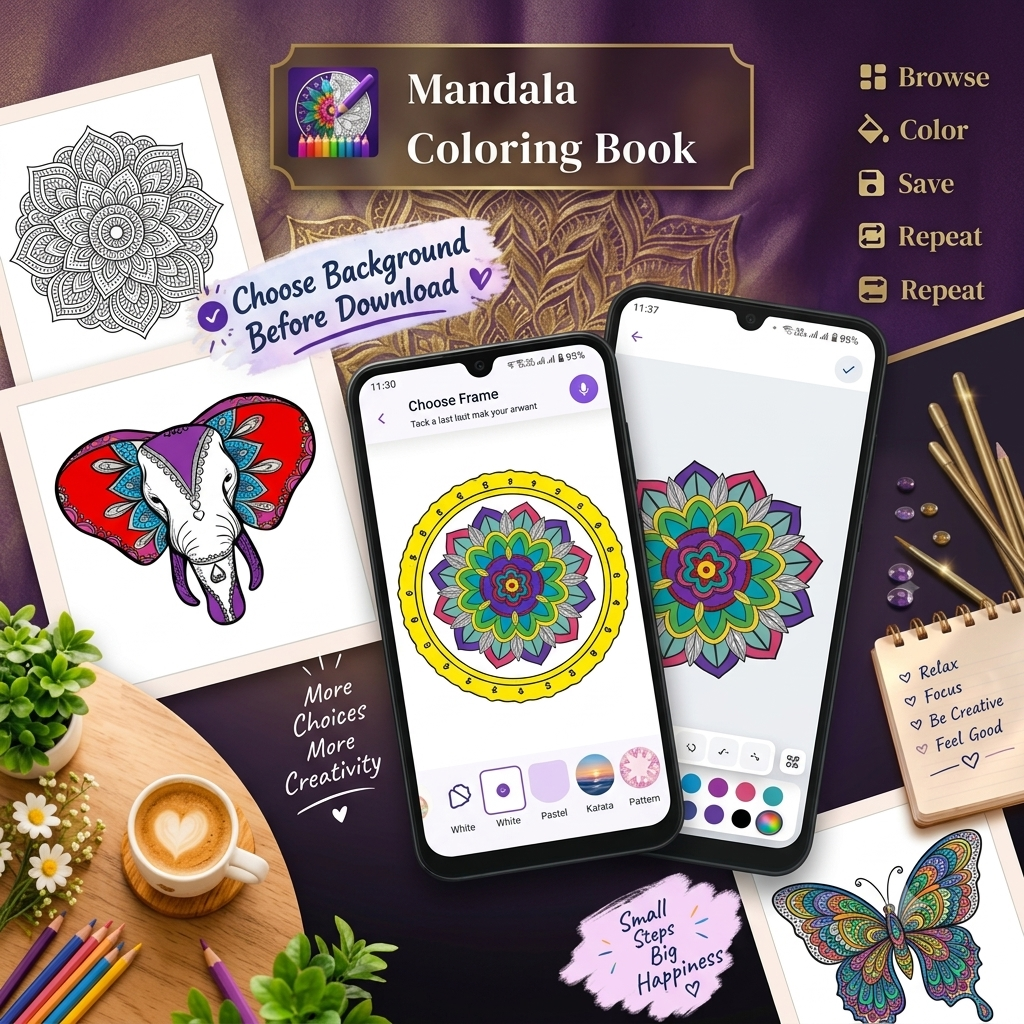
Coloring has changed a lot with the rise of smartphones and tablets. Instead of using only coloring books, colored pencils, crayons, and markers, people can now color mandalas and other designs digitally using an app.
Both digital coloring and traditional coloring can provide a creative and relaxing activity, but the experience is different. Traditional coloring gives you the physical feeling of paper and coloring tools, while digital coloring offers features such as undo, reusable designs, easy color changes, and portability.
A recent 2026 study specifically comparing digital and traditional mandala coloring found that both methods reduced self-reported anxiety, with no significant difference between the two methods in that measure. The study also found stronger physiological calming effects and flow measures in its digital coloring condition. Because the study involved 60 university students and a short coloring session, its results shouldn’t be generalized to everyone.
In this guide, we’ll compare digital coloring vs traditional coloring, including their features, advantages, disadvantages, costs, creativity, portability, and best uses.
What Is Digital Coloring?
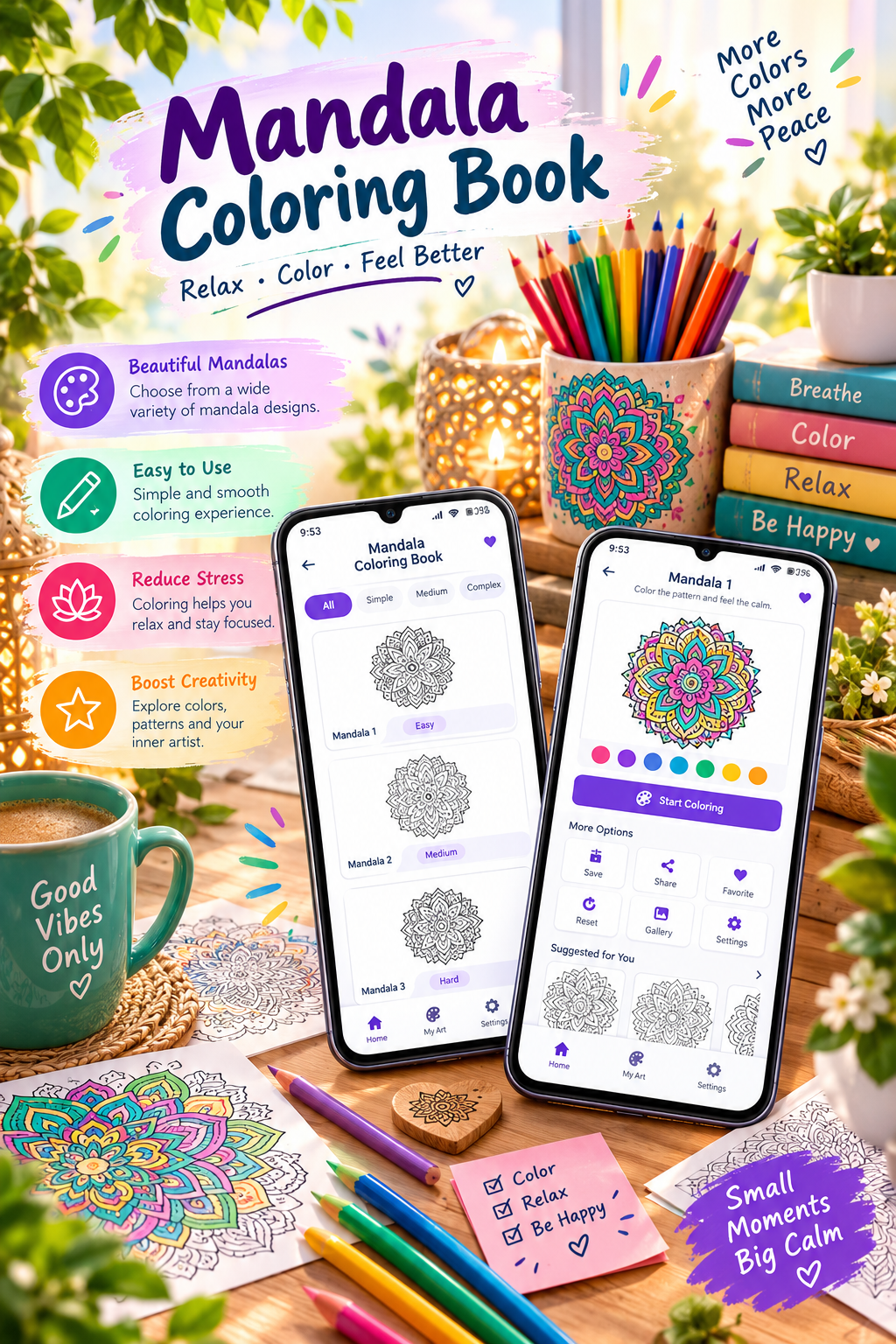
Digital coloring means coloring artwork on a smartphone, tablet, or computer using a digital coloring application.
Instead of using a physical pencil or marker, you use your finger, stylus, mouse, or another digital input. Depending on the app, you may have access to different colors, brushes, fill tools, erasers, zoom controls, and undo/redo options.
Digital mandala coloring is one popular example. Research on digital mandala applications describes them as a way of bringing a traditional coloring activity into a mobile environment, allowing users to access coloring activities in different locations.
Common Features of Digital Coloring
- Large color palettes
- Digital brushes and tools
- Undo and redo
- Eraser tools
- Zoom in and out
- Reusable designs
- Easy editing
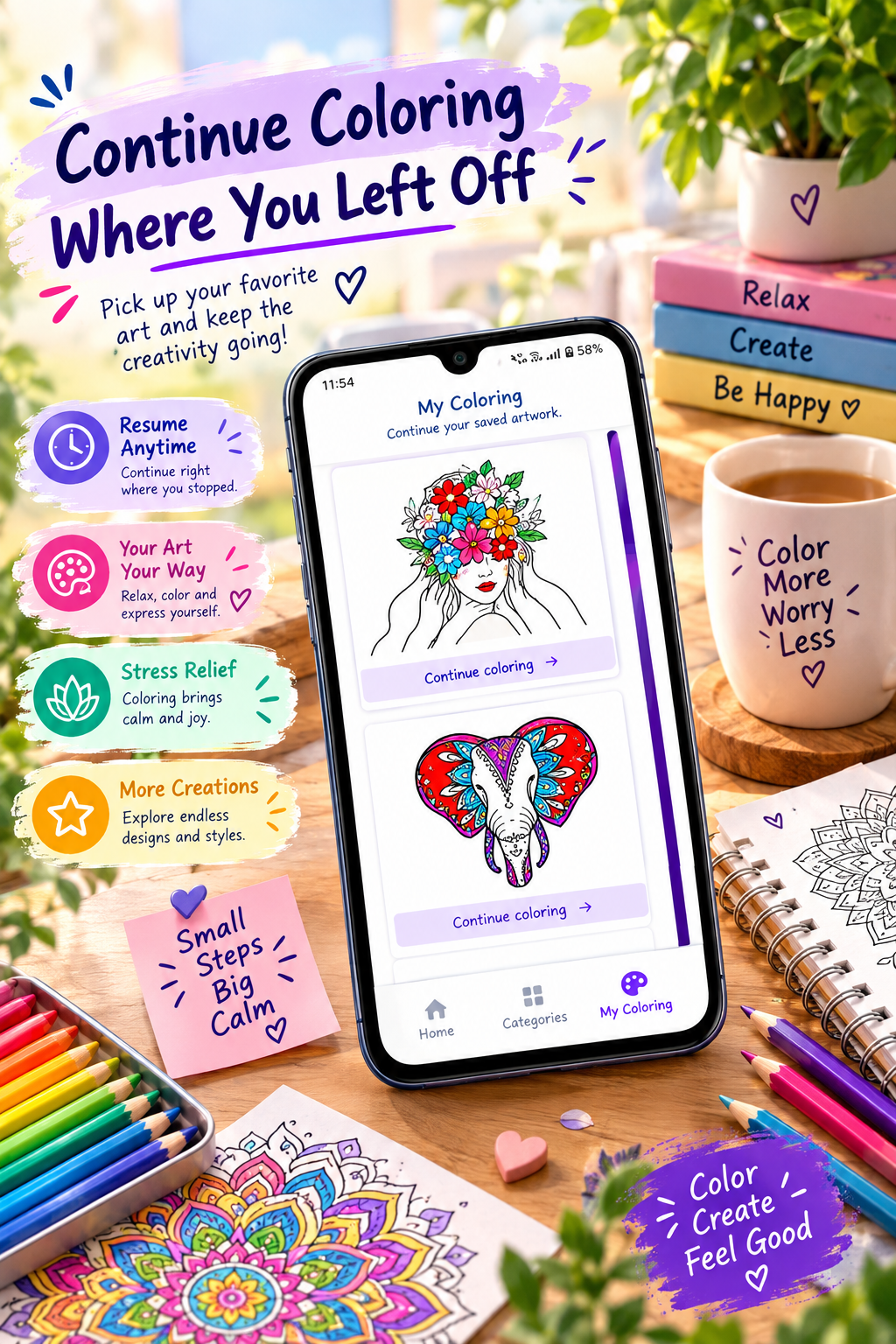
- Portable coloring library
- Digital storage
- Easy sharing
These features can make experimenting with different colors and patterns convenient.
What Is Traditional Coloring?
Traditional coloring involves physical materials such as:
- Coloring books
- Colored pencils
- Crayons
- Markers
- Gel pens
- Pastels
- Paper
You select a physical coloring page and manually fill the shapes and patterns using your chosen materials.
Traditional coloring provides a tactile experience because you can physically feel the paper and the movement of the coloring tool. It also provides an activity away from screens.
Traditional mandala coloring, for example, can involve printed mandala designs and colored pencils, markers, or pastels.
Best App for Digital Coloring and Mandala Art on Android
Digital Coloring vs Traditional Coloring: Key Differences
| Feature | Digital Coloring | Traditional Coloring |
|---|---|---|
| Medium | Smartphone, tablet, or computer | Paper or coloring book |
| Tools | Digital brushes, colors and effects | Pencils, crayons, markers, etc. |
| Undo | Usually available | Usually not available |
| Color choices | Often very large | Depends on your supplies |
| Storage | Digital | Physical pages |
| Portability | Very convenient with a phone/tablet | Requires physical supplies |
| Mess | No physical coloring mess | Can create pencil/marker mess |
| Texture | Digital surface | Real paper and coloring materials |
| Mistakes | Easy to correct | May be difficult to correct |
| Finished artwork | Digital file | Physical artwork |
| Screen use | Required | Not required |
| Supplies | Device and app | Paper and coloring materials |
1. Digital Coloring Is Easy to Edit
One of the biggest differences is how easily you can correct mistakes.
If you accidentally color the wrong section digitally, an undo button can often remove the mistake instantly.
You can also experiment with different colors without permanently changing the original design.
With traditional coloring, mistakes are usually harder to reverse. You may have to erase the color, cover it, or simply incorporate the mistake into the artwork.
2. Traditional Coloring Provides a Tactile Experience
Traditional coloring has a physical quality that digital coloring cannot completely reproduce.
You can feel:
- The texture of paper
- The pressure of a pencil
- The movement of a marker
- Different textures created by coloring materials
This physical interaction is an important part of why many people enjoy traditional coloring.
Research comparing drawing media has also found that the medium can influence drawing outcomes, showing that physical and electronic tools do not necessarily produce exactly the same experience.
3. Digital Coloring Offers More Flexibility
Digital coloring applications can make it easy to experiment.
For example, you might color a mandala with:
- Bright colors
- Pastel colors
- Dark shades
- Gradient effects
- Different combinations
- Repeated color patterns
If you don’t like the result, you can change it without throwing away the page.
Digital tools can also provide different brush types, color adjustments, and editing functions that are difficult or impossible to reproduce with a small set of physical coloring supplies.
4. Traditional Coloring Reduces Screen Dependence
Traditional coloring doesn’t require a smartphone, tablet, or computer.
This can make it useful when you want a creative activity away from a digital screen.
You simply need:
- A coloring page
- Coloring materials
- A comfortable place to sit
For children and adults who already spend significant time using digital devices, traditional coloring can also be a simple screen-free creative activity.
Best Mandala Coloring App for Digital Coloring
5. Digital Coloring Is Highly Portable
A coloring app can put many designs and tools on one device.
Instead of carrying:
- Several coloring books
- Multiple pencil sets
- Markers
- Erasers
- Sharpeners
you can use a smartphone or tablet.
This makes digital coloring particularly convenient for travel, waiting rooms, commuting, or short breaks.
6. Traditional Coloring Creates Physical Artwork
One major advantage of traditional coloring is that you have a physical page when you’re finished.
You can:
- Display it
- Put it in a folder
- Give it to someone
- Use it as decoration
- Create a physical collection
Digital coloring creates an electronic artwork instead, which can be saved and shared digitally.
7. Which Is More Creative?
Both can support creativity, but they provide different creative possibilities.
Digital Coloring
Digital tools may allow you to:
- Try unlimited or extensive color combinations
- Undo mistakes
- Experiment quickly
- Zoom into tiny details
- Recolor sections
- Save different versions
Traditional Coloring
Traditional coloring allows you to:
- Mix physical colors
- Experiment with pencil pressure
- Layer colors
- Feel different materials
- Create physical textures
- Combine different coloring tools
So creativity isn’t limited to one format.
8. Digital Coloring vs Traditional Coloring for Mandalas
Mandalas are particularly suitable for both methods because they often contain repeating shapes and detailed patterns.
With traditional mandala coloring, you might use colored pencils or markers to gradually fill each section.
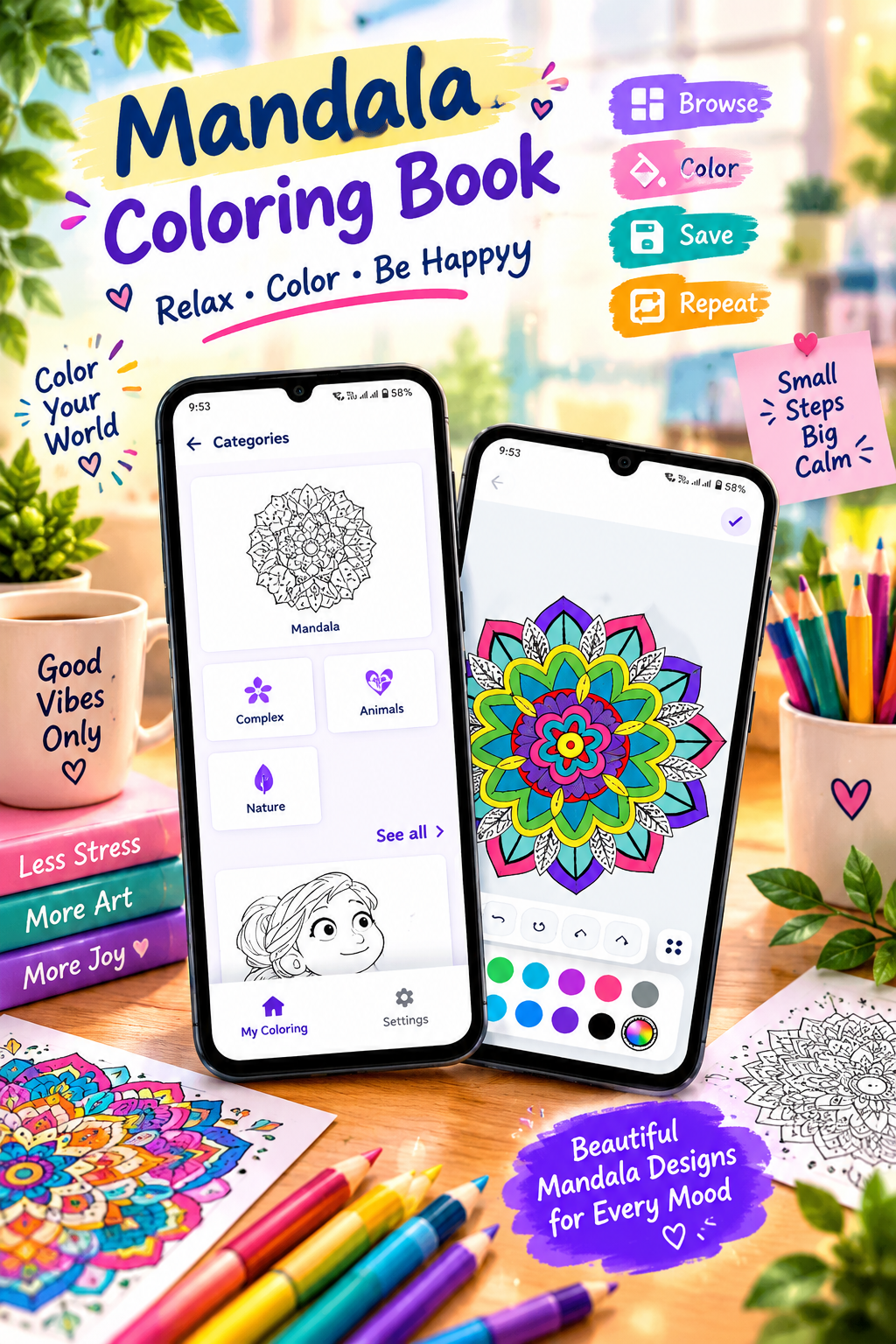
With digital mandala coloring, you can use a phone or tablet to select colors and fill the design.
A 2026 study involving 60 university students directly compared digital and paper-based mandala coloring. Both approaches reduced self-reported state anxiety, while the digital condition showed higher flow and certain stronger physiological calming measures in that study.
However, this doesn’t mean digital coloring is universally better. The researchers studied a specific group, intervention, and setting, so the findings should be interpreted within those limits.
Best App to Color Mandalas Digitally on Your Phone
Digital Coloring: Advantages
1. Easy to Correct Mistakes
Undo and redo functions make experimentation easier.
2. Convenient
You can carry your coloring activity on a smartphone or tablet.
3. Large Color Selection
Digital tools can offer a wide variety of colors and shades.
4. Less Physical Mess
There are no pencil shavings, spilled paint, or scattered markers.
5. Easy to Experiment
You can test different colors without permanently changing the original artwork.
6. Easy Storage
Your finished designs can be stored digitally instead of taking up physical space.
Digital Coloring: Disadvantages
1. Requires a Device
You need a compatible smartphone, tablet, or computer.
2. Screen Time
Digital coloring adds another screen-based activity to your day.
3. Less Physical Texture
A screen cannot provide exactly the same paper-and-pencil sensation as traditional coloring.
4. Battery Dependence
A device needs sufficient battery power for continued use.
5. App Limitations
Features can vary significantly between different coloring applications.
Traditional Coloring: Advantages
1. Tactile Experience
You physically interact with paper and coloring materials.
2. No Screen Required
You can color without using an electronic device.
3. Physical Artwork
You can keep, display, or share your finished pages.
4. Simple Setup
You don’t need to learn complicated digital tools.
5. Variety of Materials
You can combine pencils, crayons, markers, and other physical media.
Traditional Coloring: Disadvantages
1. Mistakes Are More Difficult to Fix
Once a color is applied, removing it completely can be difficult.
2. Supplies Take Space
Coloring books and multiple coloring tools can require storage.
3. Supplies Can Cost Money
You may need to purchase new coloring books, pencils, markers, or other materials.
4. Less Portable
Carrying several coloring supplies is less convenient than carrying a phone.
5. Pages Can Be Used Up
A physical coloring page generally cannot be reset after completion.
Digital Coloring vs Traditional Coloring: Cost
The cost depends on how you use each method.
Traditional coloring may require purchasing:
- Coloring books
- Colored pencils
- Markers
- Crayons
- Sharpeners
- Erasers
Digital coloring requires a compatible device and an appropriate application. Depending on the app, some features may be free while others may require payment.
If you already own a smartphone, a digital coloring app can be a convenient way to start without purchasing a separate collection of physical coloring supplies.
Best Digital Coloring App for Adults and Beginners
Which Is Better for Beginners?
Both options can work for beginners.
Digital coloring may suit beginners who:
- Prefer smartphones or tablets
- Want easy undo/redo
- Like experimenting with colors
- Want portable designs
- Don’t want to buy many physical supplies
Traditional coloring may suit beginners who:
- Enjoy physical art materials
- Want a screen-free activity
- Like paper coloring books
- Enjoy pencils and markers
- Want physical artwork
The best choice depends on the type of coloring experience you prefer.
Can Digital Coloring Be Relaxing?
Coloring has been studied as an activity associated with changes in mood and anxiety. A 2026 meta-analysis of 17 studies involving 987 hospitalized adults reported reductions in anxiety and stress associated with mandala coloring interventions, although that evidence concerns mandala coloring generally rather than proving that every digital coloring app has therapeutic effects.
A separate 2026 study specifically examining digital and traditional mandala coloring found both methods reduced self-reported anxiety in its university-student sample.
Therefore, it’s reasonable to describe coloring as a potentially relaxing creative activity, but a coloring app should not automatically be presented as a medical treatment.
Tips for Choosing Between Digital and Traditional Coloring
Choose Digital Coloring If You Want:
- Easy corrections
- A portable activity
- Lots of colors
- Reusable designs
- Digital artwork
- Quick experimentation
- Minimal physical mess
Choose Traditional Coloring If You Want:
- A screen-free activity
- Physical coloring materials
- Paper texture
- Physical artwork
- Pencil and marker techniques
- A hands-on creative experience
Try Both
You don’t necessarily have to choose only one.
You can use traditional coloring when you want a hands-on activity and digital coloring when you want convenience and portability.
Best Android App for Relaxing Digital Mandala Coloring
Digital Mandala Coloring With a Mobile App
If you enjoy mandalas and want to experiment with coloring digitally, a dedicated Android coloring application can provide a convenient way to work with designs directly on your phone.
For your Tech Solver page, you can introduce your app here:
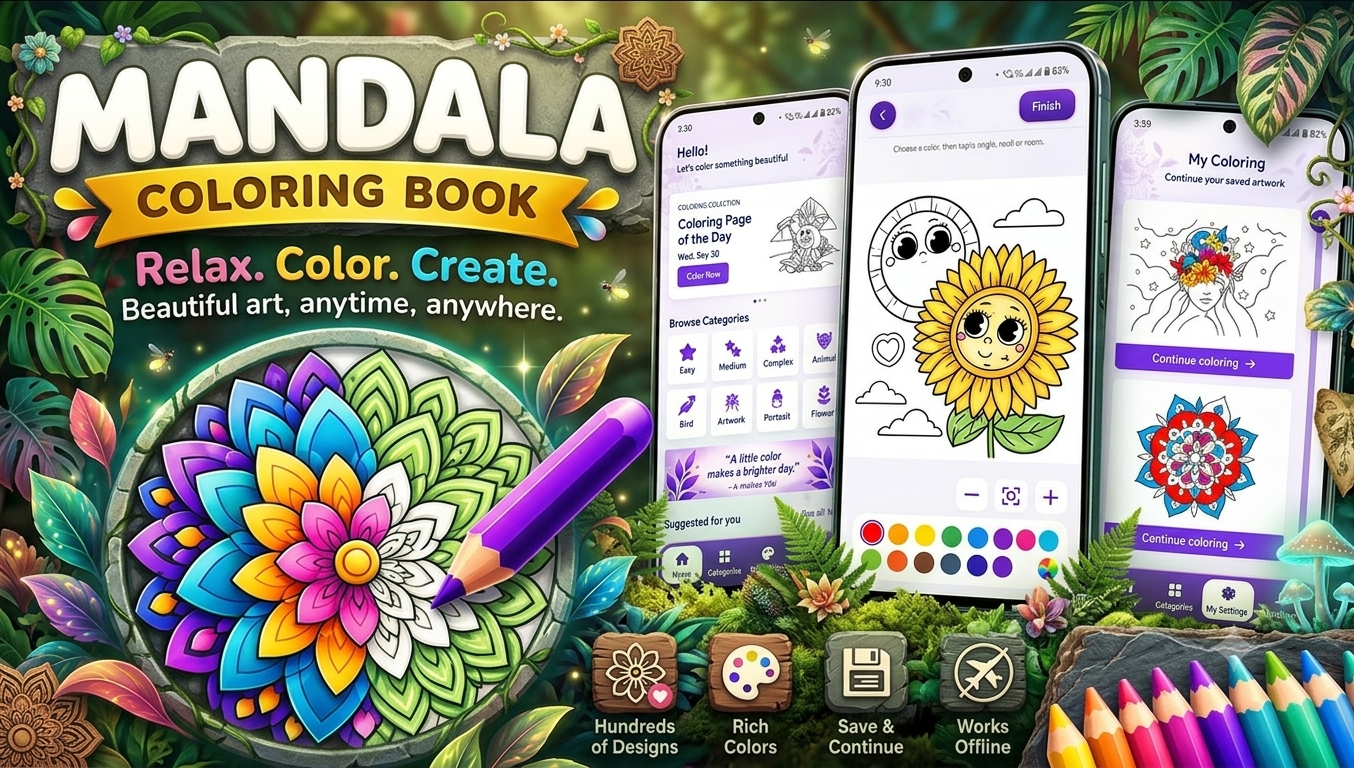
Mandala – Coloring Book is an Android coloring app designed around digital mandala coloring.
You can add your Google Play link naturally in this section:
Explore a Mandala Coloring App:
Mandala – Coloring Book on Google Play
Digital Coloring vs Traditional Coloring: Quick Comparison
| Category | Digital | Traditional |
|---|---|---|
| Convenience | Very portable | Requires supplies |
| Corrections | Undo/redo | More difficult |
| Color selection | Usually extensive | Depends on collection |
| Physical feel | Limited | Strong tactile experience |
| Screen-free | No | Yes |
| Artwork | Digital | Physical |
| Storage | Digital | Physical |
| Mess | Minimal | Can involve materials |
| Experimentation | Easy | More permanent |
| Travel | Convenient | Requires supplies |
| Mandala coloring | Available through apps | Available through books |
Frequently Asked Questions
Is digital coloring better than traditional coloring?
Neither method is universally better. Digital coloring offers convenience, editing tools, and portability, while traditional coloring offers a physical, screen-free experience.
Is digital coloring as relaxing as traditional coloring?
Research on digital mandala coloring has found reductions in self-reported anxiety comparable to traditional mandala coloring in a specific university-student study. The results don’t establish that every digital coloring app will have the same effect.
What is the biggest advantage of digital coloring?
One major advantage is flexibility. You can often undo mistakes, change colors, zoom into details, and save your artwork digitally.
What is the biggest advantage of traditional coloring?
Traditional coloring provides a physical and tactile experience and does not require a screen.
Can I color mandalas digitally?
Yes. There are many digital mandala coloring applications that allow users to color detailed mandala designs on smartphones and tablets.
Is digital coloring good for children?
Digital coloring can provide a creative activity for children, but parents may want to consider overall screen time, age-appropriate apps, and whether the child also has opportunities for hands-on creative activities.
Can digital coloring replace traditional coloring?
It can replace it for some activities, but the two formats offer different experiences. Digital coloring cannot completely reproduce the physical sensation of paper, pencils, crayons, and markers.
Can I use both digital and traditional coloring?
Absolutely. Using both can give you the flexibility of digital tools while still allowing you to enjoy traditional art materials.
Final Thoughts
Digital coloring and traditional coloring are two different ways to enjoy the same basic creative activity.
Digital coloring makes it easy to experiment with colors, correct mistakes, carry designs anywhere, and store finished artwork on a device. Traditional coloring provides the physical experience of paper and coloring materials, along with the satisfaction of creating something tangible.
For mandala coloring in particular, current research suggests that both digital and traditional approaches can be useful for short-term relaxation-related outcomes, while more research is still needed to understand how different digital designs and interaction methods affect people over longer periods.
If you enjoy coloring on your smartphone, Mandala – Coloring Book can be featured on your Tech Solver website as a convenient digital option for exploring mandala designs.



Leave a Reply