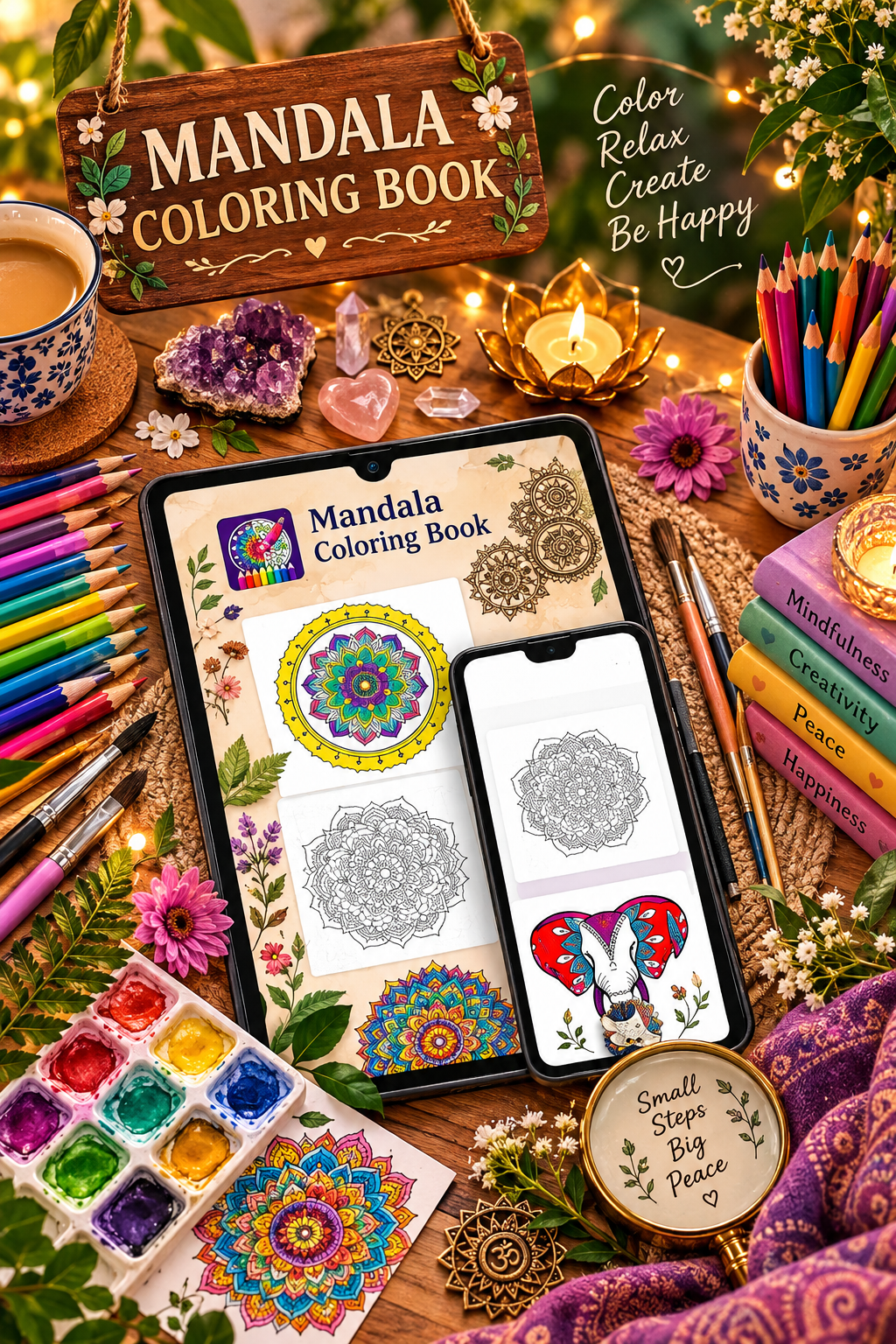
🎨 Mandala Art: Meaning, History and Benefits
Mandala art is much more than beautiful circles and patterns. With its symmetrical designs, repeating shapes, and detailed patterns, mandala art has become popular among artists, hobbyists, and people who enjoy relaxing creative activities.
The word “mandala” comes from Sanskrit and means “circle.” In traditional Buddhist contexts, mandalas can represent a sacred environment or a structured visual representation used for contemplation and spiritual practice.
Today, mandala designs are also widely enjoyed as a form of drawing, coloring, decoration, and creative relaxation.
🌸 What Is Mandala Art?
Mandala art is a type of artwork built around a central point, with shapes and patterns extending outward in a balanced and symmetrical way.
A typical mandala may contain:
- Circles
- Geometric shapes
- Flowers
- Leaves
- Petals
- Stars
- Dots
- Repeating patterns
- Symmetrical lines
- Decorative borders
The central point often acts as the visual focus, while surrounding patterns create a sense of balance.
Mandalas can be simple enough for beginners or extremely detailed for experienced artists.
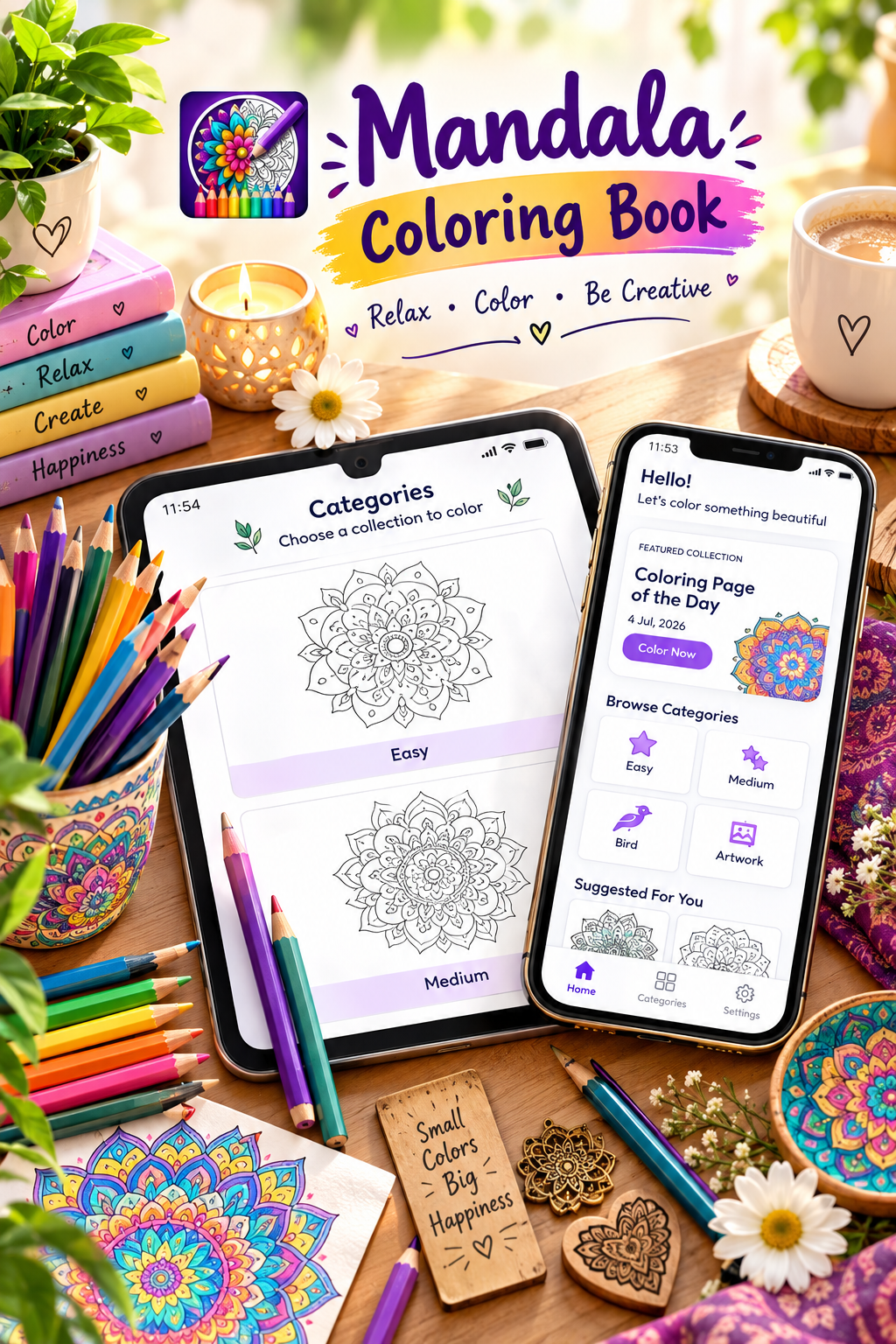
Best App to Explore Mandala Art: Meaning, History and Benefits
🕉️ What Does Mandala Mean?
The Sanskrit word mandala means “circle,” while the concept can carry deeper meanings depending on its cultural and religious context.
In Buddhist traditions, mandalas can represent an ordered sacred realm and are used as tools for meditation and visualization. The Smithsonian describes Tibetan mandalas as geometric compositions with a central deity and as tools associated with the path toward enlightenment.
In modern art and coloring, however, mandalas are often appreciated simply for their:
- Symmetry
- Beauty
- Repetition
- Creativity
- Decorative appearance
- Relaxing coloring experience
📜 History of Mandala Art
Mandala traditions have a long history in South Asian and Buddhist cultures.
Mandalas became particularly important in Buddhist practices, where they could serve as objects for contemplation, visualization, ritual, and meditation. Buddhist art spread from India across Central, East, and Southeast Asia, carrying mandala traditions with it.
By around the 8th century CE, two-dimensional mandalas were being created on materials such as paper and cloth across Asia. They could be displayed in temples or used during religious ceremonies.
🧘 Tibetan Buddhist Mandalas
Tibetan Buddhism developed a particularly famous tradition of mandala creation.
Tibetan monks may create intricate mandalas using colored sand. The process can take days and requires considerable concentration and precision.
One of the most fascinating aspects is what happens afterward: the completed sand mandala is traditionally swept away. This represents the impermanence of existence.
This makes the mandala not only an artwork but also a reminder that things change and do not remain permanent.
Best Mandala Coloring App to Learn and Enjoy Mandala Art
🏵️ What Makes Mandala Art Special?
One of the most recognizable features of mandala art is symmetry.
Patterns are often repeated around a central point. For example, an artist may create one flower petal and repeat it around the circle to create a balanced design.
This repetition can make even a simple drawing look highly detailed.
Some common mandala structures include:
1. Circular Mandalas
These use circles and curved lines as their primary structure.
2. Floral Mandalas
Flowers and petals are repeated to create decorative patterns.
3. Geometric Mandalas
These use triangles, squares, circles, lines, and other geometric elements.
4. Nature-Inspired Mandalas
These include leaves, flowers, butterflies, birds, and other natural elements.
5. Spiritual Mandalas
These are inspired by traditional religious and meditation practices.
🎨 Benefits of Creating Mandala Art
Mandala drawing and coloring can be an enjoyable creative activity for people of different ages.
Here are some potential benefits.
1. Helps You Relax
Coloring detailed patterns gives you something specific to focus on.
Instead of constantly switching between different tasks, you can concentrate on choosing colors and filling individual sections.
Research on mandala coloring has found reductions in perceived stress in some controlled studies.
2. Encourages Creativity
Mandala coloring doesn’t require you to follow one particular color scheme.
You can experiment with:
- Bright colors
- Pastel colors
- Dark shades
- Monochrome designs
- Warm colors
- Cool colors
- Contrasting combinations
This gives you plenty of opportunities to develop your own artistic style.
3. Improves Concentration
Detailed mandalas require attention to small spaces and repeating patterns.
While coloring, you can focus on:
- Staying inside the lines
- Repeating color patterns
- Matching symmetrical sections
- Creating balanced combinations
This can make mandala coloring an engaging concentration activity.
4. Encourages Mindful Attention
Mandala coloring is sometimes used as a mindfulness-related activity, although research findings are not completely uniform.
For example, one randomized study found that mindfulness-guided mandala coloring reduced anxiety more effectively than unguided coloring, while the unguided mandala group did not show the same effects.
Best App for Mandala Art, Coloring and Creative Designs
So, mandala coloring can be used as a relaxing activity, but it should not be presented as a guaranteed treatment for anxiety or other health conditions.
5. Provides a Creative Break
You don’t always need to spend hours drawing.
A short mandala coloring session can give you a break from screens, work, studying, or repetitive daily activities.
You can simply choose a design, select a few colors, and start filling the patterns.
6. Can Support Stress Management
Recent research continues to investigate mandala coloring as a low-cost activity for managing psychological stress.
A 2026 meta-analysis covering 17 studies and 987 participants reported reductions in anxiety and stress among adult hospitalized participants who took part in mandala-coloring interventions. However, the researchers also rated the overall certainty of evidence as low to very low, meaning more high-quality research is needed.
So it is more accurate to describe mandala coloring as a potential supportive relaxation activity, rather than a medical treatment.
📱 Create Mandala Art on Your Android Phone
You don’t necessarily need paper, pencils, or colored markers to enjoy mandala art.
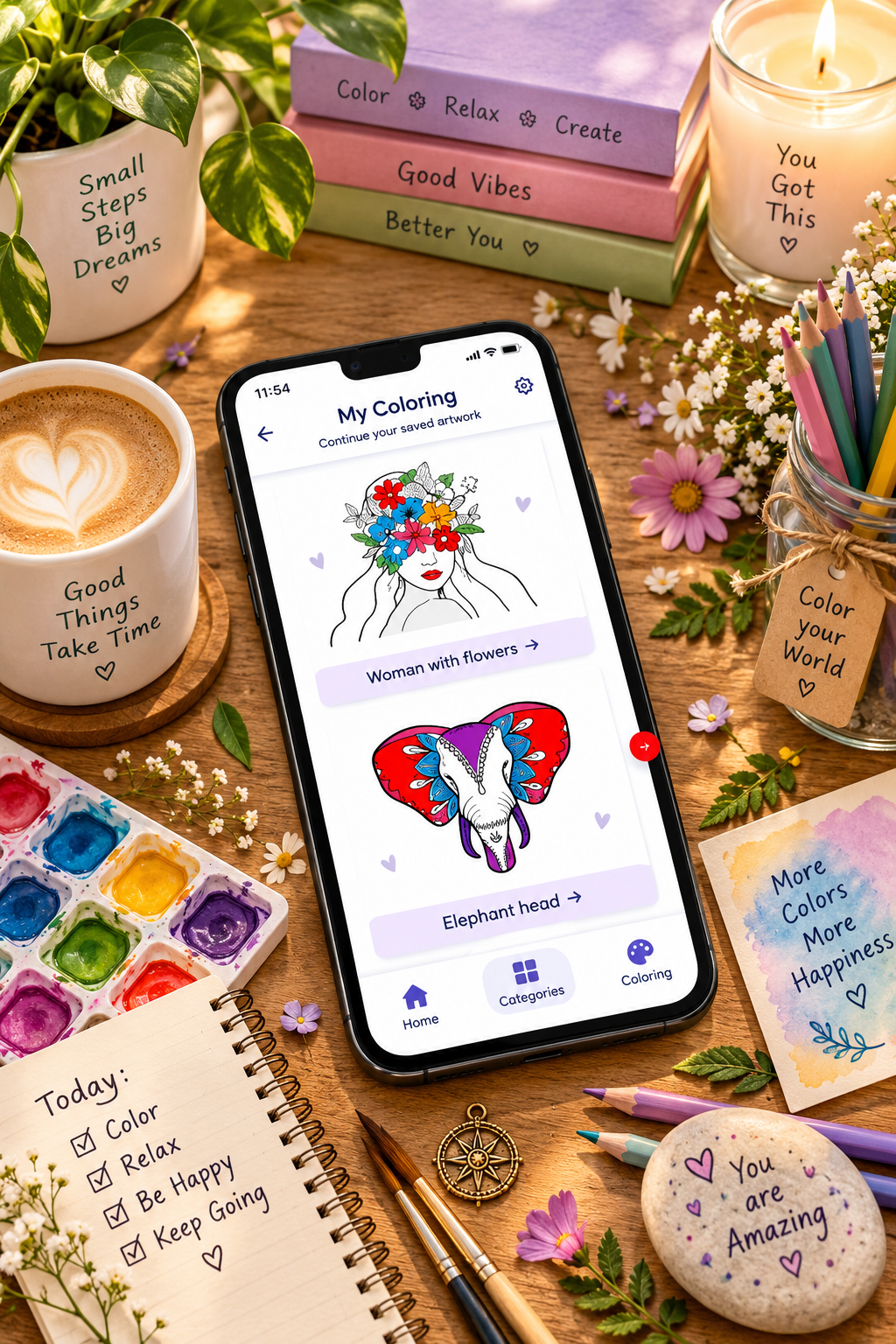
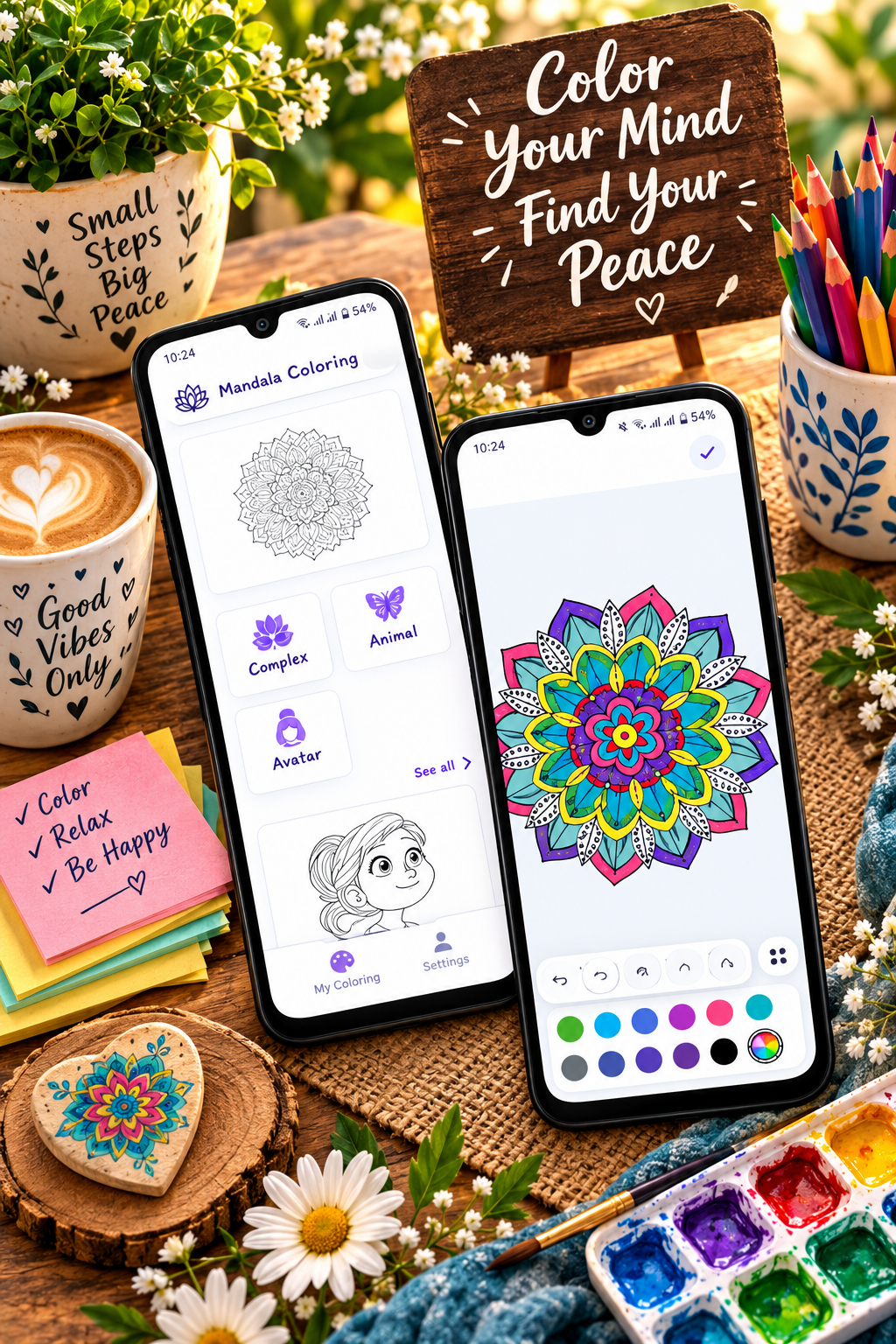
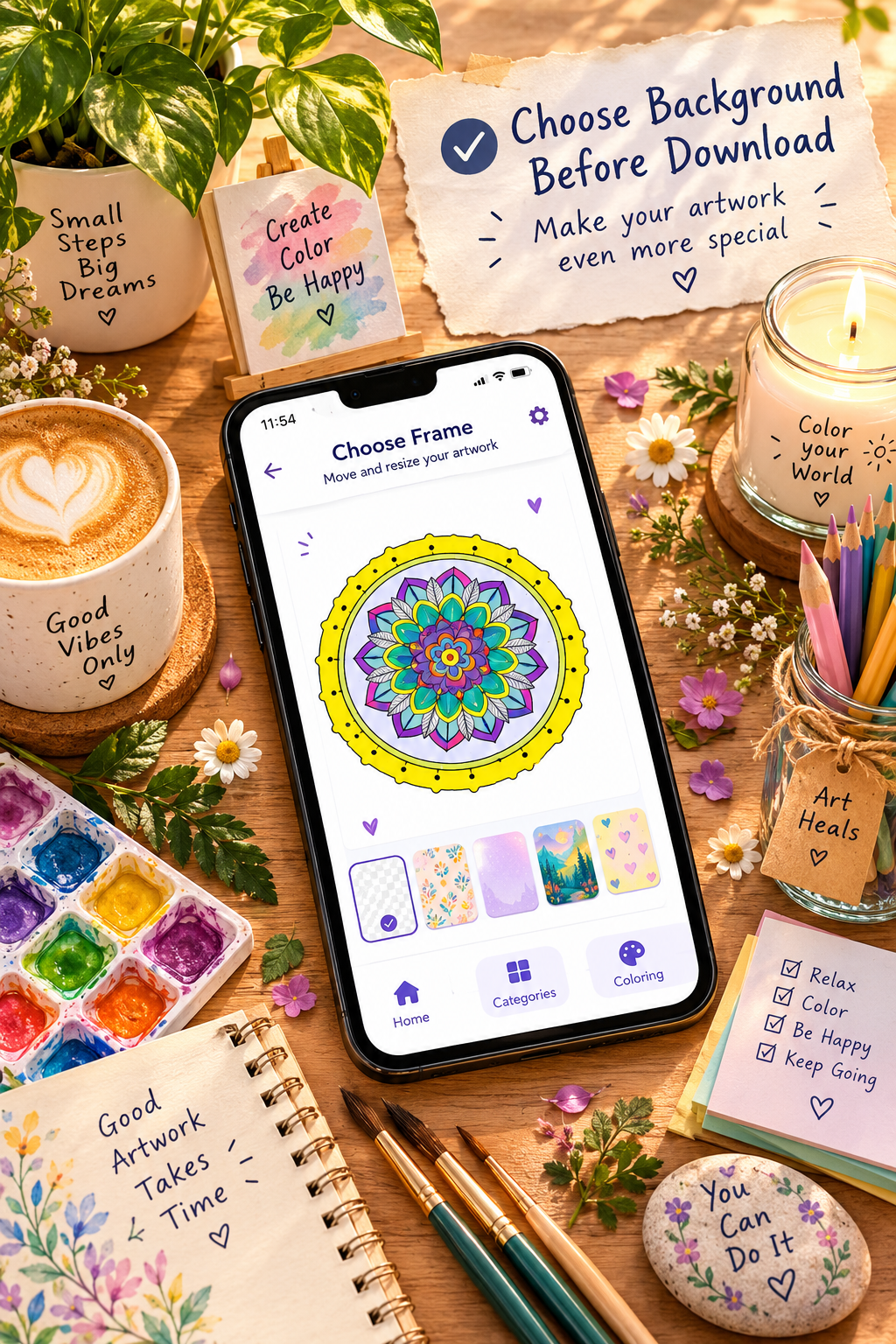
Digital mandala coloring apps allow you to create colorful designs directly on your smartphone.
If you enjoy experimenting with different colors and patterns, you can use your Android phone to practice mandala coloring whenever you have free time.
🎨 Try Mandala – Coloring Book
For your Tech Solver page, you can introduce your app here:
Mandala – Coloring Book
Download Mandala – Coloring Book on Google Play
The app can be presented as a convenient option for people who want to explore mandala coloring digitally without needing a physical coloring book.
🖌️ How to Create Your Own Mandala
Want to create a mandala from scratch? Follow these simple steps.
Step 1: Draw a Circle
Start with a large circle. This will become the outer boundary of your mandala.
Step 2: Find the Center
Mark a small point in the middle.
Step 3: Add Basic Shapes
Start adding simple circles, petals, triangles, dots, or curved lines around the center.
Step 4: Repeat the Pattern
Take one small design and repeat it around the circle.
Try the Best Mandala Art Coloring App on Android
Step 5: Add More Details
Fill empty areas with smaller patterns.
Step 6: Choose Your Colors
Select a color palette before coloring or experiment as you go.
Step 7: Add Final Details
Use dots, outlines, highlights, or contrasting colors to finish your artwork.
🌈 Mandala Color Combination Ideas
Choosing colors can completely change the appearance of a mandala.
🌸 Soft and Relaxing
Try:
- Light pink
- Lavender
- Baby blue
- Cream
- Soft green
🌞 Bright and Energetic
Try:
- Yellow
- Orange
- Red
- Pink
- Bright blue
🌿 Nature-Inspired
Try:
- Green
- Brown
- Yellow
- Sky blue
- Earth tones
🌌 Dark and Elegant
Try:
- Navy blue
- Purple
- Burgundy
- Black
- Silver or white accents
👩🎨 Mandala Art for Beginners
If you’re new to mandala art, don’t start with the most complicated design.
Begin with:
- Simple circles
- Basic petals
- Repeated dots
- Simple geometric patterns
- Small symmetrical designs
Once you’re comfortable, gradually add more layers.
The important thing is not to make a perfect mandala on your first attempt. The goal is to enjoy the creative process.
💡 Mandala Art Ideas to Try
Here are some ideas for your next project:
- 🌸 Flower mandala
- 🦋 Butterfly mandala
- 🌿 Nature mandala
- ⭐ Star mandala
- 🌙 Moon-inspired mandala
- 🌞 Sun mandala
- ❤️ Heart mandala
- 🌈 Rainbow mandala
- 🌀 Geometric mandala
- 🪷 Lotus mandala
You can also combine different themes to create something completely unique.
📱 Why Try Digital Mandala Coloring?
Digital coloring has several practical advantages.
Easy to Access
You can keep your artwork on your phone and color whenever you have time.
No Physical Supplies
You don’t need pencils, markers, paper, or coloring books.
Easy to Experiment
Digital coloring lets you try different colors without worrying about wasting materials.
Convenient
You can enjoy mandala coloring while traveling, relaxing at home, or taking a short break.
🧘 Mandala Art and Meditation
Traditional mandalas have an important connection with meditation and visualization, particularly in Tibetan Buddhist practices.
Practitioners may visualize a mandala as a three-dimensional palace and use it as part of contemplative practice.
Modern mandala coloring is different from these traditional religious practices, but the repetitive patterns can still provide a focused creative activity.
Best App to Create and Color Beautiful Mandala Art
🌟 Who Can Enjoy Mandala Art?
Mandala art can appeal to:
- 🎨 Art lovers
- 👩🎨 Beginners
- 🧘 People who enjoy relaxing hobbies
- 📱 Digital-art enthusiasts
- 🖍️ Coloring enthusiasts
- 🧑🎓 Students looking for creative breaks
- 👨👩👧 Families looking for creative activities
The complexity of the design can easily be adjusted according to your skill level.
⚠️ Is Mandala Coloring a Medical Treatment?
No.
Although research has reported possible reductions in stress and anxiety with some mandala-coloring interventions, evidence varies by study and population. The 2026 meta-analysis specifically noted low or very low certainty for several outcomes.
Therefore, mandala coloring should be considered a creative and potentially relaxing activity, not a replacement for professional medical or mental-health care.
❓ Frequently Asked Questions
What does mandala mean?
Mandala comes from Sanskrit and means “circle.” In Buddhist contexts, it can refer to a sacred geometric representation used for contemplation and visualization.
What is mandala art used for?
Traditionally, mandalas have been used for contemplation, meditation, visualization, and religious rituals. Today, mandala designs are also widely used for drawing, coloring, decoration, and creative activities.
Is mandala art difficult?
No. Beginners can start with simple patterns and gradually move toward more detailed designs.
Can I create mandala art on my phone?
Yes. Digital mandala coloring apps allow you to color and experiment with mandala designs directly on an Android device.
Does mandala coloring reduce stress?
Research suggests it may help reduce perceived stress and anxiety in some settings, but results are not universal and the evidence has limitations.
What colors are best for mandalas?
There are no fixed rules. You can use pastel, bright, dark, monochrome, or nature-inspired color palettes depending on your preferred style.
🎯 Final Thoughts
Mandala art combines symmetry, creativity, repetition, and visual beauty. From its traditional role in Buddhist contemplation to today’s digital coloring apps, the mandala has developed into a popular form of creative expression.
Whether you prefer drawing mandalas by hand or coloring them digitally, the activity gives you an opportunity to experiment with patterns and colors while taking a break from everyday routines.
If you want to explore mandala coloring digitally, you can try Mandala – Coloring Book on Android and start creating colorful designs directly on your phone.




Leave a Reply